Vote for the oddest book title of the year at TheBookseller.com.
Candidates include I Was Tortured by the Pygmy Love Queen and Solving Cheese Problems.

Photo courtesy of *nomad* (Flickr)
 Compiled by Joyce Hansen, MLIS
Has your self-imposed ban on leisure reading finally been lifted now that summer's here? Give your weary, weary brain a rest with these suggestions, bibliophiles. Thanks to Nancy Pearl's Book Lust 101 class, winter quarter, for this list of some of their all-time favorite books and writers, and use the comments section to add your own treasured must reads.
 People say life is the thing, but I prefer reading. -- Logan Pearsall Smith
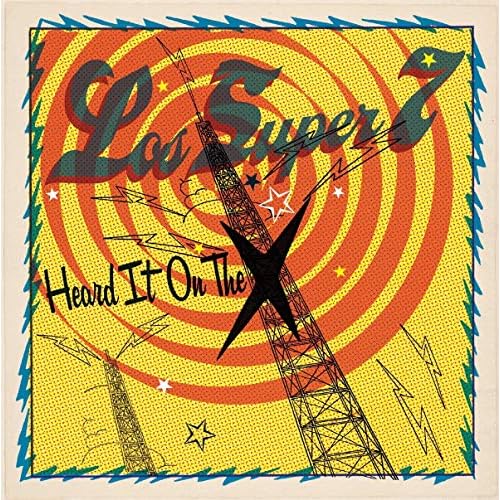 The library is a salvation for my practically non-existence media budget. The other day I picked up a CD and as I listened the first thing I thought was: Holy crap! Heard It on the X by Los Super Seven is theA and B the C of D. Released in 2005, it features a variety of Texas singers, (Delbert McClinton, Joe Ely, Freddy Fender, Clarence "Gatemouth" Brown among others ), paying tribute to a Mexican radio station of the 30's -- 50's, (the station is a fascinating story in itself). I wouldn't be surprised if you have this already.
 I just finished a book called Little Money Street by Fernanda Eberstadt, published by Knopf in 2006. It's about Gypsy musicians in the South of France bordering on
You Suck, A Love Story by Christopher Moore, HarperCollins 2007. In this fast-paced romp, Jody and Tommy, two teenage vampires, attempt to 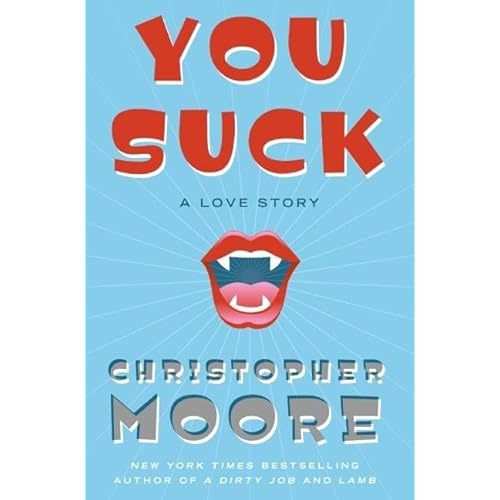

047 Cathi Stout - Hips and Abdomen
049 Virginia Rogers - Thanks for the Memories, "Bear" Bryant
050 Cambodian Funk Yodeler - Unknown Title
051 Dick Clark - Open Letter to the Older Generation
*052 The DeZurik (Cackle) Sisters - Intro/Old Dan Tucker/Whipperwill Song
056 Wizz-o (Chris Palestis) - Don't You Want Me/I Love Rock and Roll
057 Buddy Max - Uncle Mistletoe
059 Richard Dawson - Apples and Oranges
*Highly Recommended--The Cackle Sisters can make their yodeling sound like chickens! Not to miss!
The "365 Days Project" is linked to ubu.com, another choice stop. From the site: Ubu.com is a completely independent resource dedicated to all strains of the avant-garde, ethnopoetics, and outsider arts. Here you'll find cinema shorts, MP3 interviews with the likes of Marcel Duchamp, and other intriguing installations.
Have you heard: MARY HARTMAN MARY HARTMAN is out on DVD!!! MH2-a-thon, baby!
Joyce Hansen, MLIS
Silverfish Editor, '06-'07
Me, at 18 mos., with my books


Publication excerpt
The Museum of Modern Art, MoMA Highlights, New York: The Museum of Modern Art, revised 2004, originally published 1999, p. 346
Untitled (Paperbacks) is a room-sized installation that feels empty but isn't quite: on all four walls hang rows of long white objects that look like shelves but are not, for they are plaster, not wood, and their surfaces are uneven, and vacant. These regularly spaced tiers suggest a library without books, yet books were here, and their traces remain. Whiteread made these objects by casting shelves of paperbacks, whose slightly differing sizes account for the plaster's uneven surfaces. Look closely, too, and you may see a residue of paper embedded in the casts, the edges of the pages caught as the plaster dried.
Whiteread specializes in the sculptural reversal that makes a solid object speak less of its own material presence than of objects that are no longer present, yet maintain a ghostly presence in their absence. The early work of this British artist comprised castings of everyday furniture—mattress, table, bathtub—in mediums from resin to concrete. She next addressed architecture, as in Untitled (Room) (1993), a plaster work also in the Museum's collection: here empty space becomes an opaque cube marked on its outside by the lines of a room's windows and door. Her more recent outdoor Holocaust memorial in Vienna is another room, once lined with books, which left their marks on the outside of a sealed block, symbolizing the lives and the culture lost to Nazi persecution. Untitled (Paperbacks), by contrast, is a library you can enter. Although there is nothing to read in it, it is filled with the knowledge, ideas, and memories contained in books, even if you must bring those associations with you into this serene, but haunted, place.
MUSIC
The Gothic Archies / THE TRAGIC TREASURY: Songs from A Series of Unfortunate Events. 2006. Nonesuch Records. www.nonesuch.com/thegothicarchies. Shake up your music cache with this compilation of witty, miserable songs, most of which originally showed up within the audio versions of the Lemony Snicket books. Lemony Snicket not only writes wondrous strange children’s books, he plays the accordion. Along with Snicket, The Gothic Archies are singer/songwriter Stephin Merritt and John Woo on electric sitar. The songs are short in length and lyrics included. Sing along! The music is jaunty, and, sometimes vaguely reminiscent of 80s pop songs with their angst-filled chords and gloomy singers (hello, Morrissey). The chorus from the song Scream and Run Away:
When you see Count Olaf, count to zero;
Then scream and run away
Scream, scream, scream and run away
Run, run, run, run, run, run, run
or die, die, die, die, die, die, die, die,
Run, run, run, run, run, run, run, run,
or die, die, die, die, die, die, die, die, die, die, die
Hee-larry-us!
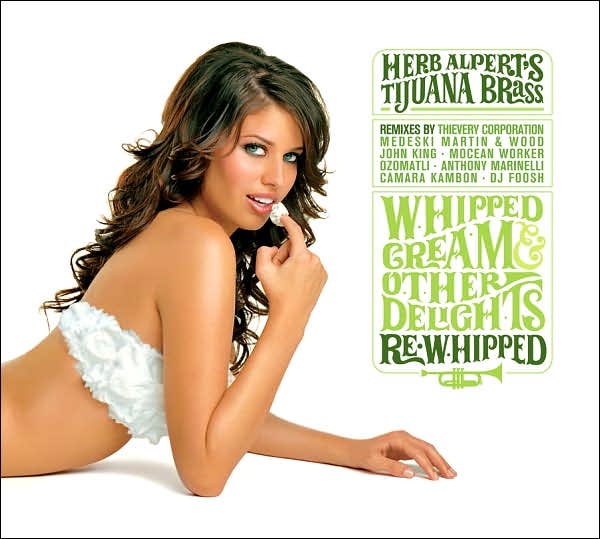
Herb Alpert’s
BOOKS
The Polysyllabic
From the book: “Books are, let’s face it, better than everything else. If we played cultural Fantasy Boxing League, and made books go fifteen rounds in the ring against the best that any other art form had to offer, then books would win pretty much every time. Go on, try it. The Magic flute v. Middlemarch? Middlemarch in six. The Last Supper vs. Crime and Punishment? Fyodor on points. See?”
Because I’ve only finished half of it(!), I can’t say if it’s all-the-way-through noteworthy, but there’s remarkable consistency in this and his other books, and because of that I’m going to go ahead and say, pick it up: it’s smart and entertaining.


Alternate Universes, 2002
these drawings as instructions to himself: “draw an evolutionary tree on pleasure,” mental maps of imaginary territory. Paragraphs explain some of the drawings. Byrne cites Lawrence Weschler and his book, Everything That Rises: A Book of convergences as some of what makes him consider connections beyond the obvious. Byrne: “(Weschler) asks if the similarities in the branching structures of neurons, trees and genealogies mean that we have a predisposition towards making things fit these structures.” What stories do we tell ourselves? No commitment to reading straight through—open it and step in anywhere.
That’s all, folks!
 the black silhouette of a thickly-branched tree, the cover image looks remarkably like the neural circuitry of the brain; the visual suggestion is one of networks, connections, expansion and growth.
On the other hand, he finds fault with the time-honored process of deliberation, arguing that it is possible to “blunder, and blunder badly” even when many minds are working on an issue for a considerable amount of time. The greatest potential of the Information Age, in Sunstein’s estimation, lies somewhere in the middle. There is great promise in many minds working together, as long as those minds don’t get lost in the mire of endless and circuitous deliberation.
Sheri Boggs is a 2nd year day MLIS student. Before coming to the i-School
she was a writer and editor for the Pacific Northwest Inlander in Spokane.
 Greetings! I trust you're having a merry new year. To help muddle through whatever else winter may have in store for us here in the Pacific NW, I’d like to offer up a selection of books (& one DVD) that I enjoyed in 2006, and hope you have time to read one or two.
 Escaping the Delta. Elijah Wald. This book will change the way you listen to the blues. Although a scholarly work, it reads like a novel. The core figure is Robert Johnson, yet he remains the missing piece of the jigsaw puzzle. If you had asked any of Johnson’s contemporaries about him, with the exception of the very few that lived in his small part of the Delta, your questions would be met with a resounding, “Who?” This book also has a lot of information on women in the blues.
Moby Dick. Herman Melville. This was my summer project. Whew! Everyone thinks they know that this book is about the obsessed sea captain and the white whale. It is, but out of 650 pages, only about 50 pages are spent on that story. Instead, you learn everything about whales and whaling. And the language! All told from the viewpoint of a 19th century sailor who has read all of Shakespeare and is trying to write like the immortal bard himself. You keep turning pages just to see if Melville can keep it up. And he does.
Chronicles. Bob Dylan. Bob is sort of like Starbucks these days; he seems to be everywhere. I enjoyed this book. But then again, I like Bob. He seems to write from the persona of a really smart guy pretending to be a regular Joe pretending to be a really smart guy. Tiresome part: The “fame and fortune is such a drag” song and dance. If fortune and fame is a drag, then give all your money away and go bag groceries. I mean, look, Gary Coleman did, and he became governor of California. Didn’t he? This leads us to:
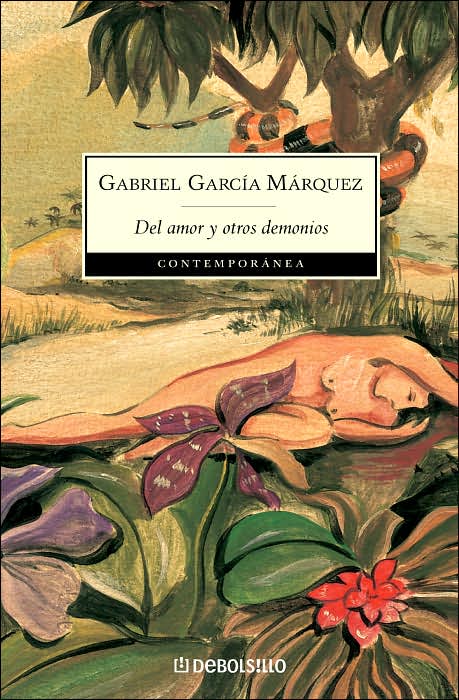
Masked and Anonymous. DVD. Written by Bob Dylan and Larry Charles (Seinfeld director). Directed by Larry Charles. I think this film, which made many critics' lists of worst movies of 2003, is really misunderstood! And not just because I like Bob. Instead of putting the story into the context of Dylan's songs, I think he was trying for the magic realism style of Gabriel Garcia Marquez. Like most of Garcia Marquez, it takes place in a mythical South American country. John Goodman, Luke Wilson, and Bob himself play a sort of holy trinity of Bobness. Plus Jeff Bridges and Jessica Lange. What's not to like?
Well, I'm off to cram in some leisure reading for "Book Lust 101." If I come across something racy or particularly adventuresome, I'll pass it along.
Cheers,